Practicing through Focused, Purposeful, and Creative Repetition

No matter how you do it, practicing is about doing something over and over again – repetition. I’ve found that there are three important ingredients that make repetition work for me. Rather than mindlessly hacking at a passage, I make sure that I’m approaching it over and over again with:

  1. Focus
  2. Purpose
  3. Creativity

I explain more and demonstrate the approach in this video:

Amazing Grace Lip Slur

I try to approach even warming up and technical work with as much musicality as possible. It can be difficult to “feel it” when we’re playing lip slurs, in particular. But since the voice was our first instrument, songs are helpful at moving us away from managing the trumpet to making music through it. I realized that much of the first phrase of the well-known hymn, Amazing Grace, is a lip slur. So, I thought it would be a great way to approach what is a daunting task for many trumpet players.

Play these through with all fingerings, noting where valve changes are required. I included the first line text to remind us of how it goes. For even better results, sing each phrase through before playing.

John Hagstrom on Teaching, Learning, Listening, Motivation, and Persistence

Notes from Lee University Trumpet Lab September 27, 2021

  • Teachers: it’s about who they are not what they teach
  • Value relationships with fellow students.  They will not necessarily remember how you played, but will remember how you treated others.
  • Be a role model for others now.
  • Learn from others around you, just like members of a good orchestra listen and learn from one another.
  • Bad teachers help us to become extra good students.
  • Customize your time as a music student.  Invent your own pathway for success.
  • We can become a good teacher by becoming a good student.
  • Georges Mager’s insightful (over)statement: “There is no such thing as good teachers, just good students.” 
  • Teach students to become good students.
  • Be stubborn.  Don’t give up.
  • “$800 Kleenex” – anything is available if you’re willing to pay for it.  Is it worth it?
  • It’s not innate ability that’s important.  Instead, it is your ability to invest in your learning.
  • Ask yourself, how do you awaken the feeling for what you want to do?  Figure out what motivates you.
  • Most people don’t try very hard.  Imagine yourself at 26 years old still working hard towards your goals.
  • Envision being invested long after others.
  • Prepare by adding up the hours over time.  It’s not about the practice right before the recital.  Rather, who is practicing 6 Tuesday nights before the recital?
  • Listen with undivided attention – active listening.  Stay with the story. 
  • Build literacy.  Be like the baby listening and trying to figure it out even if they don’t yet understand.
  • When you were a child, you had no attention or desire to watch a sitcom made for adults.  You were satisfied by cartoons.
  • Go to a professional orchestra concert!
  • Stick with listening to long pieces of music. 
  • Whether you like it or not, learn from it!
  • Studying music requires a presumption of expertise.  Expect transformation.  There is greater art out there beyond what I currently know. 
  • Learn how to learn.
  • Come wanting to learn.
  • Be prepared.  What if you showed up to rehearsal and were ready to perform?  That’s what professionals do.
  • Play “Stop and Drop” (studio class activity where, if you stop, you are done until next time)  – keep going no matter what, raising the standard for professional music making.
  • Vulnerability – willingness to work and share with others.
  • Section playing – how to give when you aren’t being recognized for it.
  • Sousa’s bass drum player:

from John Philip Sousa: American Phenomenon by Paul E. Bierley, 1973

Why it Might Be Worth Memorizing Your Next Solo

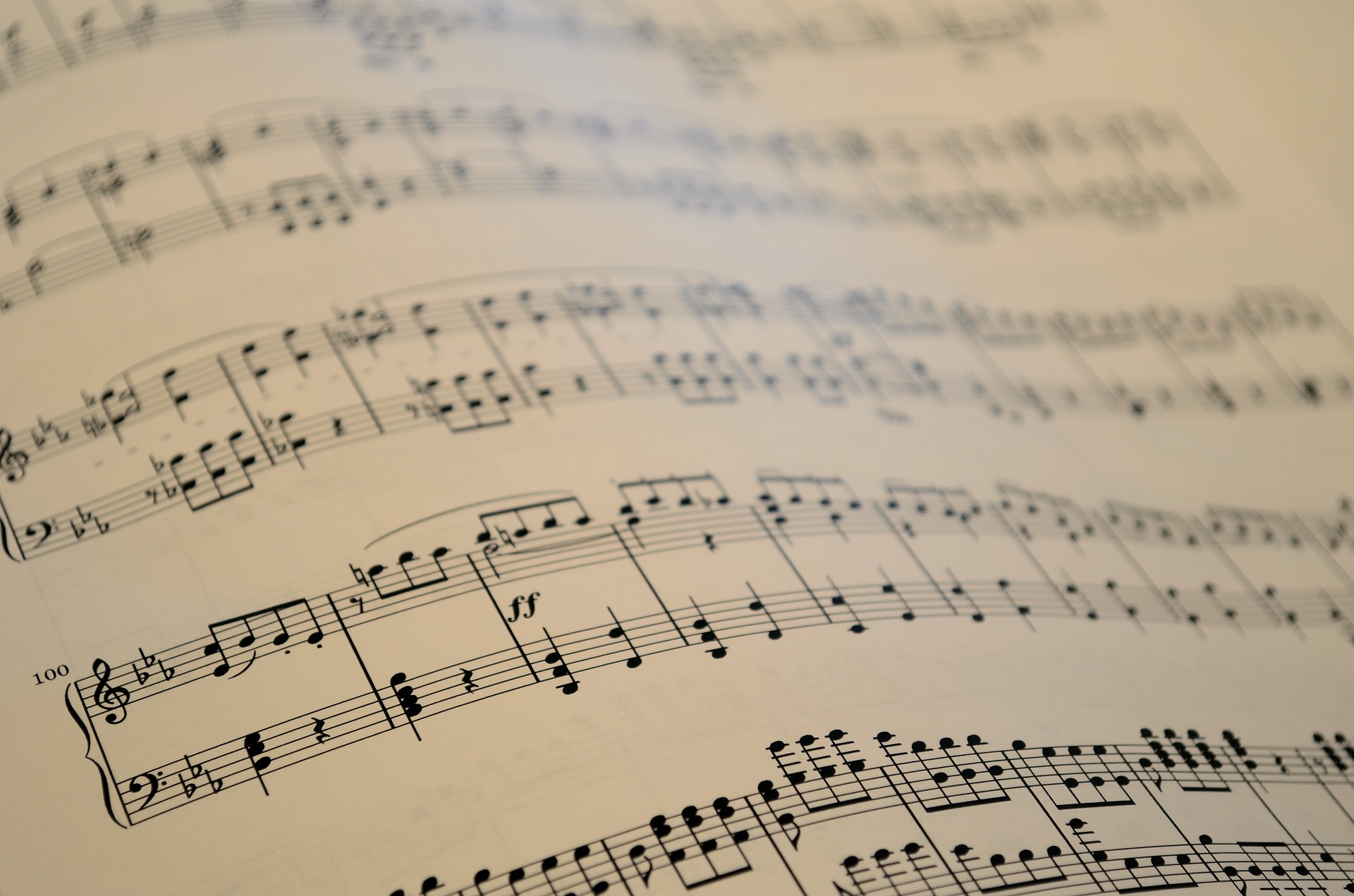
sheet-music-1229481_1920A few years ago, if you had asked me to memorize a piece of music I probably would’ve quickly dismissed the idea. Other than marching band, a few orchestral excerpts, and some warm-ups, I played very rarely without music. More recently, however, I’ve come to realize what I had been missing by not getting away from written music at times. Here are a few things I’ve discovered:

1) The process of memorizing makes learning the music more important than learning how to play the music. Here’s what I mean: too often we focus on the challenges that a piece demands of us, like the fingers, tongue, range, speed, endurance, etc. Of course, we have to work on these things, but when we are working to make music away from the page, we’re more focused on getting the sound of the piece inside of us. Recalling the musical story becomes the goal rather than overcoming any technical hurdles involved.

2) Memorization can free us up to pay attention to the other parts of a piece of music. Single line instrumentalists and vocalists too often forget that there is more to a musical work than what they hear in the practice room. The fact is that our part in most pieces works together with other parts, such as a piano or ensemble. A great benefit to memorizing AND a solid way to build memory is to get to know the other parts that work together with ours.

3) Once we start memorizing a piece of music we can practice it anywhere and anytime, with or without our instrument or music. My eight-year-old son who studies with the Suzuki method goes about many days singing or whistling the pieces he is working on. I’m convinced that even though he doesn’t know it, he is essentially practicing at these times. Subconsciously, he’s working out the details of the sounds, patterns, rhythms, phrasing, etc. This is a great advantage, especially for those of us who have limited practice time with our instrument.

4) It’s an empowering feeling of accomplishment when we really know a piece of music, not just because we can read it from the page. We’re no longer dependent upon something like a teleprompter to feed us our lines in performance. Plus, we now know the piece better than we ever would have with the music staring us in the face for the thousandth time.

If you were like me and rarely have committed music to memory, why not try it? Let me know what you discover along the way.